
Last Updated: November 5, 2026
Quick Summary
Practical first aid training proves you can perform skills under observation, while video-based first aid training only shows you what to do and builds awareness. Most learners need both, with supervised practice and assessment where competence must be demonstrated.
- Video cannot verify compression quality, hand placement or decision-making under time pressure.
- Blended training combines online theory with a supervised practical session for flexibility and hands-on practice.
- The practical assessment tests CPR, AED use, wound dressing and scenario-based exercises under direct observation.
- Skills fade without practice, so treat refreshers as practice and assessment rather than re-watching modules.
- On-site delivery brings the trainer and equipment to your workplace, with all training equipment provided.
Table of Contents
- Practical vs Video Based First Aid Training: The Core Difference
- How Each First Aid Training Format Actually Works
- What the First Aid Practical Assessment Actually Tests
- How Blended First Aid Training Combines Both
- First Aid Course Duration: Time Cost of Each Format
- Skill Retention and What Video Cannot Verify
- On-Site First Aid Training for Teams and Workplaces
- Choosing the Right Format for Your Learners
- Frequently Asked Questions
Practical vs Video Based First Aid Training: The Core Difference
The core difference between practical and video based first aid training is simple: video shows you what to do, while practical training proves you can do it. One builds awareness. The other builds competence. Most learners need both, but not in equal measure, and the right mix depends on why you’re training in the first place.
This guide breaks down how each format works, what the practical assessment actually tests, and where video-based learning falls short.
First aid training is the structured process of learning to recognise and respond to injury and illness until professional help arrives. In Australia, nationally recognised first aid training is delivered by a registered training organisation.
How Each First Aid Training Format Actually Works
Each format delivers the same underlying content through a different channel. The channel changes how much you remember and how confident you feel when it counts.
Video-based and online delivery
Online learning delivers first aid theory through recorded demonstrations, interactive modules, and knowledge checks. You watch, you read, you answer quizzes, and you move on. It’s flexible and repeatable, which makes it useful for covering the knowledge component of a first aid course.
What it cannot do is watch your hands. A video can show correct compression depth. It cannot tell you that yours is too shallow.
Face-to-face and supervised practical sessions
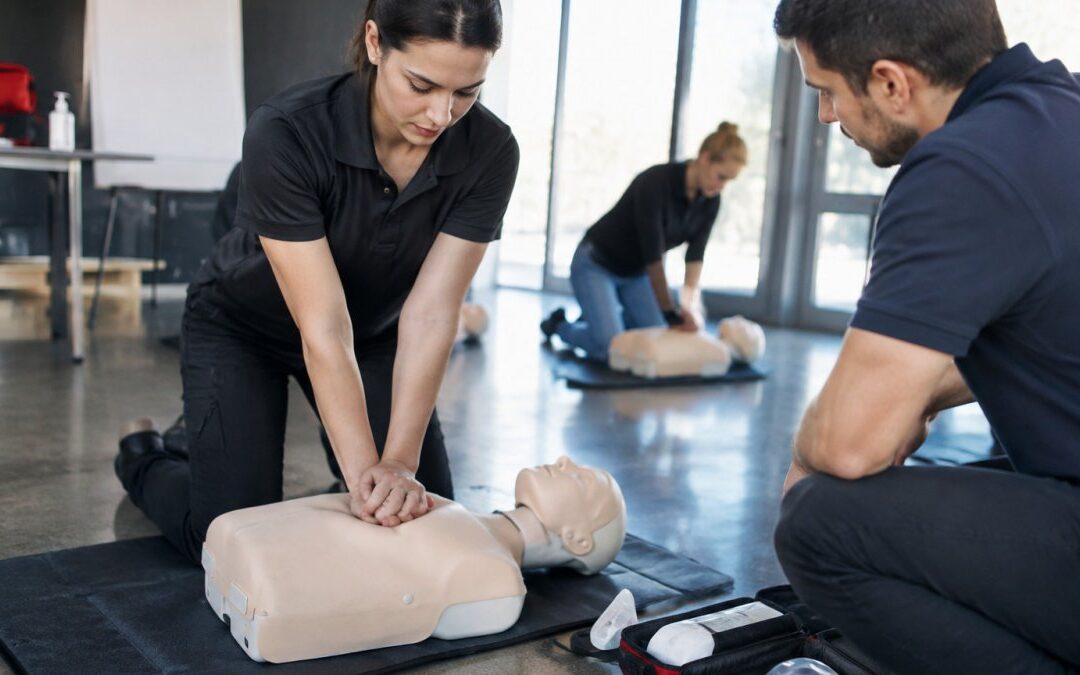
Face-to-face training puts a trainer in the room with you, a CPR manikin under your hands, and a set of scenarios to work through. Supervised practice means someone corrects your technique in real time, before a bad habit sets in.
This is where learner confidence actually forms. Reading about resuscitation and performing resuscitation are different experiences, and only one of them prepares you for a real emergency response.
What the First Aid Practical Assessment Actually Tests
The first aid practical assessment tests whether you can perform required skills to a competent standard, not whether you can recall facts. A trainer observes you demonstrate CPR, bandaging, and injury management, then signs off on your competency.
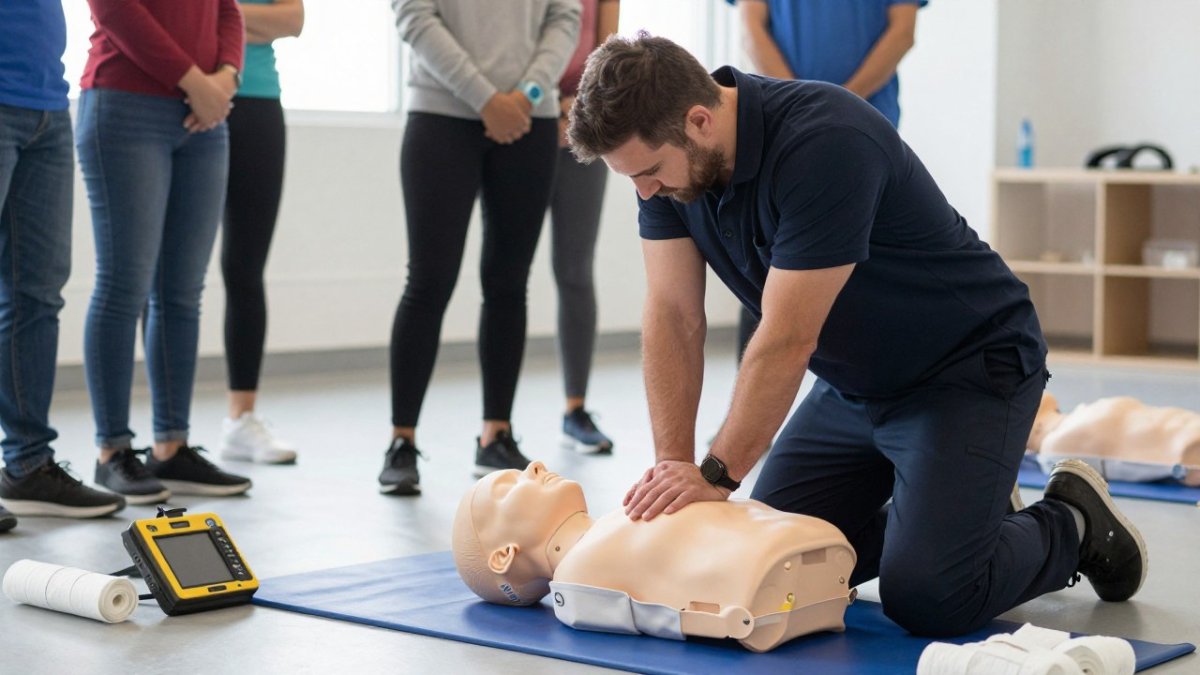
Expect the assessment to cover:
- CPR and cardiopulmonary resuscitation on a manikin, including compression rate, depth, and rescue breaths
- AED use, from pad placement to following the automated external defibrillator prompts
- Wound dressing and bleeding control
- Scenario-based exercises where you respond to a simulated emergency
- Skills demonstration under direct observation
How Blended First Aid Training Combines Both
Blended first aid training generally combines online theory with a supervised practical session.
This model exists because it respects two realities. Theory is efficient to deliver online. Skills are not. Blended learning keeps the flexibility of online modules while preserving the hands-on practice that certification actually depends on.
First Aid Course Duration: Time Cost of Each Format
First aid course duration varies by format, and the difference matters when you are scheduling a team or comparing quotes. The useful way to compare is total learner time, not the length of the classroom session. Total learner time has four components: theory study, supervised practice, assessment, and logistics such as travel and waiting.
A full face-to-face course typically runs across a single day, with theory, demonstration, practice, and assessment interleaved. Blended delivery usually splits that into a self-paced online theory component plus a shorter hands-on session for practice and assessment. Video-only learning looks fastest because it fits around your schedule, but it removes the practice and assessment blocks entirely, which is precisely why a certificate built on video alone may not satisfy workplace requirements that call for demonstrated practical competence.
For planning purposes, think in three blocks: theory hours, practice hours, and assessment hours. Blended training compresses the first block by moving it online. It cannot compress the second without weakening the outcome, because supervised practice is where a trainer corrects technique before a bad habit sets in.
The cost side follows the same logic. When you compare quotes, separate the components rather than comparing headline prices:
When comparing quotes, ask for the total cost to certification rather than the headline course fee. Pricing depends on quantity, dates and delivery, so request a current quote from Provide First Aid Gold Coast.
For individual learners, the trade-off is different. Video-only modules are efficient for knowledge refreshers and for people who only need general awareness. Anyone who needs to perform first aid under pressure, or whose workplace requires assessed competence, should budget for the practice and assessment blocks and treat the online component as preparation rather than the whole course.
Skill Retention and What Video Cannot Verify
Skill retention is where the gap between formats becomes obvious, but it is worth being precise about why. The mechanism is feedback: a trainer who stops you mid-compression and adjusts your hand position creates a correction you carry into the next attempt. Video can demonstrate the correct position, but it cannot observe yours, so the correction never happens.
Refresher training matters because skills fade without practice. When you plan refreshers, treat them as practice and assessment, not as re-watching modules.
Video cannot verify three things that matter most:
- Compression quality under fatigue, including rate and depth as your arms tire
- Hand placement and technique on a manikin, where a trainer can see and correct errors
- Decision-making during a live scenario with time pressure and incomplete information
A common mistake is treating a completed online module as proof of readiness. It proves you covered the content. It does not prove you can act. The distinction matters most in the first minutes of an emergency, when the response is a physical sequence rather than a recalled fact.
To judge effectiveness objectively, look at what is actually measured rather than what is claimed:
- Observed CPR technique, assessed against a competency standard rather than self-report
- Scenario performance, where the learner must recognise and respond without prompting
- Knowledge checks, which confirm understanding but not capability
- Time to complete, which is a convenience measure, not an effectiveness measure
On-Site First Aid Training for Teams and Workplaces
On-site first aid training brings the trainer and equipment to your workplace. Provide First Aid Gold Coast delivers mobile courses to businesses, sporting groups and organisations, with all training equipment provided.
For operations managers coordinating staff across multiple sites, on-site delivery removes the need to send people to a venue. Trainers with extensive first aid and CPR experience run the session, and courses are designed to be simple and easy to understand.
As a training partner of Healthcorp, Provide First Aid Gold Coast delivers training that fits around your schedule. Pricing depends on quantity, dates and delivery, so call us to book your course and get a quote.
Choosing the Right Format for Your Learners
Choosing the right format comes down to one question: does this person need to know first aid, or perform it?
|
Learner or use case |
Recommended format |
Why |
|---|---|---|
|
Workplace WHS compliance |
Blended or face-to-face |
Practical competency is assessed and documented |
|
Construction or mining teams |
On-site face-to-face |
Supervised practice in the work environment |
|
Parents and guardians |
Face-to-face with CPR practice |
Confidence comes from doing, not watching |
|
Sporting club volunteers |
Blended |
Flexible theory plus supervised practical session |
|
Pure theory refresher |
Video-based modules |
Efficient for knowledge checks only |
Best for: teams needing certified, assessed competence on site. Skip if: you only need general awareness and no certification.
Frequently Asked Questions
Is practical first aid training better than video-based training?
For skills you have to perform with your hands, supervised practice does more. Video-based learning explains the theory well, but it cannot confirm whether your compressions are deep enough or your bandage is tight enough. A practical first aid assessment lets a trainer observe your skills on a manikin. Video works best as preparation before that hands-on session, not as a replacement for it.
Does video-based first aid training include hands-on practice?
Usually not on its own. Pure online modules cover first aid theory, knowledge checks and quizzes, but there is no manikin, no trainer and no supervised practice. Blended first aid training solves this by pairing online modules with a face-to-face session where you practise CPR, resuscitation and injury management under observation. If a course advertises hands-on practice, check that a practical session is included before you enrol.
How long does a practical first aid course take?
First aid course duration depends on the format. Course duration depends on the format and the course provider. Check the course schedule with Provide First Aid Gold Coast for current timings.
Which first aid training format is best for workplace teams?
Blended or on-site practical courses are a common fit for workplace teams. Trainers can come to your site and bring all training equipment. Compare formats against your WHS obligations and how many staff need certification before you book.
Ready to move your team from watching to doing? Provide First Aid Gold Coast brings practical, hands-on first aid and CPR training to your location, with all equipment supplied and courses kept simple and clear. Call us to book your course and get your team certified with confidence.

Recent Comments