
Table of Contents
- What You’ll Need Before Booking a Mobile First Aid Course
- Understanding HLTAID012 Provide First Aid in an Education and Care Setting
- Meeting ACECQA First Aid Requirements for Childcare
- Step-by-Step: Scheduling Your Mobile First Aid Course for Childcare
- First Aid Certification Renewal for Childcare Staff
- Common Mistakes to Avoid When Arranging Mobile First Aid Training
- Why Mobile Training Works Better for Childcare Centres
- Frequently Asked Questions
Last Updated: October 11, 2026
What You’ll Need Before Booking a Mobile First Aid Course
Before contacting a mobile first aid course provider for childcare, gather basic information: staff numbers needing training, preferred dates, and specific skills required. Confirm your centre meets ACECQA requirements, which mandate current first aid certification for educators.
A mobile first aid course for childcare brings qualified trainers and equipment directly to your location, eliminating travel coordination. Provide First Aid Gold Coast designs mobile training to fit your operational schedule rather than rigid timetables.
Have your centre’s contact details, staff roster, and preferred dates ready. Clarify whether your team needs CPR, first aid, or both, different roles may have different requirements, helping the trainer prepare appropriately.
Understanding HLTAID012 Provide First Aid in an Education and Care Setting
HLTAID012 is the nationally recognised qualification childcare educators must hold to meet Australian regulatory standards. It covers CPR, choking response, wound management, and paediatric emergencies specific to education and care settings.
HLTAID012 differs from general first aid by focusing on child-specific scenarios and age-appropriate responses. It covers anaphylaxis management, asthma response, and allergic reactions in children, skills general courses may not prioritise.
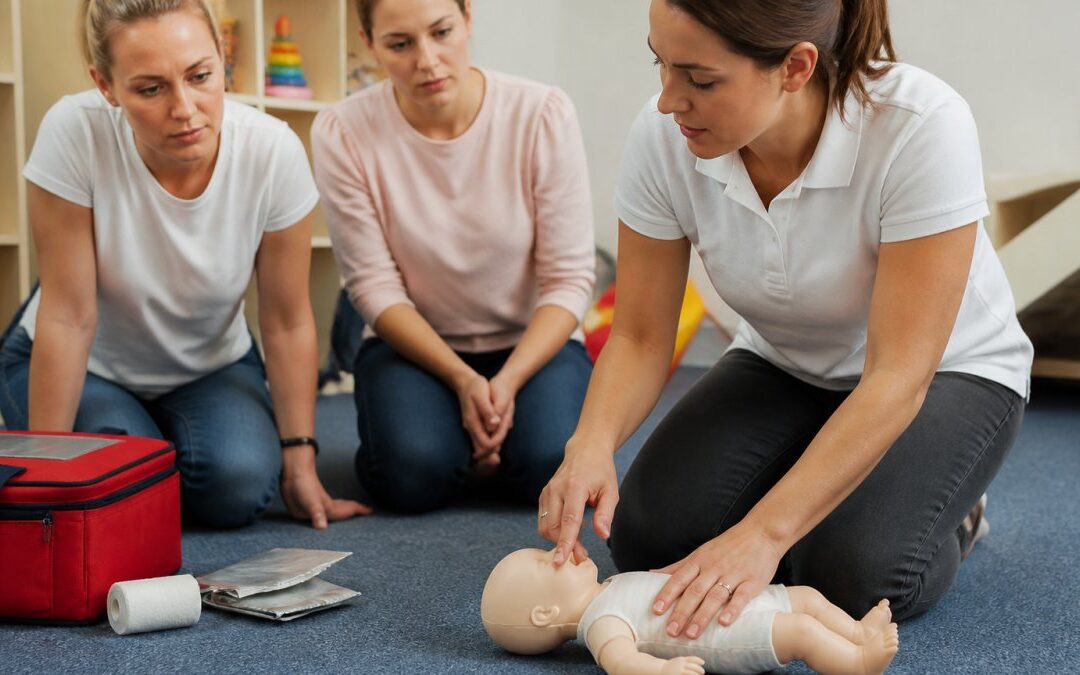
A mobile first aid course for childcare centred on HLTAID012 lets your team learn in the familiar environment where they’ll apply these skills, practising real scenarios like responding to a choking toddler or managing severe allergic reactions.
Meeting ACECQA First Aid Requirements for Childcare
ACECQA sets the regulatory framework for childcare centres. ACECQA requirements mandate that at least one educator with current first aid certification must be present whenever children are in care, a legal obligation for any centre operating in Australia.
Your centre must maintain current certifications across your team. A mobile first aid course for childcare meets this requirement without disrupting operations, since training happens on-site during hours that work for your schedule.
Documentation Requirements for Regulatory Compliance
ACECQA expects centres to maintain detailed training records scrutinised during audits. For each staff member who completes first aid training, retain:
- Training completion certificate – the original or certified copy issued by the Registered Training Organisation (RTO)
- Training date and expiry date – clearly recorded so you can track renewal deadlines
- Trainer name and RTO registration number – verifying the training was delivered by an accredited provider
- Attendance records – documentation showing which staff member attended which session
- Scope of training – confirmation of whether the qualification was HLTAID012, CPR-only, or a specialised module (e.g., anaphylaxis management)
Store records in a centralised, accessible location, physical or digital. Use a spreadsheet or compliance software to track expiry dates and flag renewals automatically, retrievable within minutes for auditors.
Presenting Training Records During Audits
During quality assessments, auditors request evidence that educators hold current first aid certification. Centres that promptly produce a summary listing all staff, certification status, and expiry dates demonstrate strong compliance culture.
If a certification has lapsed, document the expiry date and when replacement training was scheduled or completed. For staff under transition arrangements, note the training date and expected completion. Auditors expect evidence of immediate remedial action.
Keep records for at least the duration of each staff member’s employment, plus one additional year. This protects your centre if questions arise after someone has left.
Managing Certification Expiry Proactively
Create a tracking system flagging certifications expiring within three months. Use a wall calendar or shared digital calendar with reminders. When booking a mobile first aid course, immediately update records with the new expiry date.
If multiple staff certifications expire around the same time, coordinate a single mobile training session, more cost-effective and ensuring compliance doesn’t fragment across renewal dates.
Step-by-Step: Scheduling Your Mobile First Aid Course for Childcare
Step 1: Assess Your Team’s Training Needs
Identify who needs training and what qualifications they require. Count staff and note current certification status, some may need HLTAID012 renewal, others initial certification or CPR-only refresher training.
Document upcoming expiry dates to plan training in advance. Consider whether your team needs training on specific topics like anaphylaxis management or asthma response based on current enrolment.
Step 2: Contact Your Mobile First Aid Provider
Contact your mobile first aid provider and describe your centre’s needs: staff numbers, preferred dates, and focus areas. Provide First Aid Gold Coast coordinates training across multiple staff and works with your operational schedule.
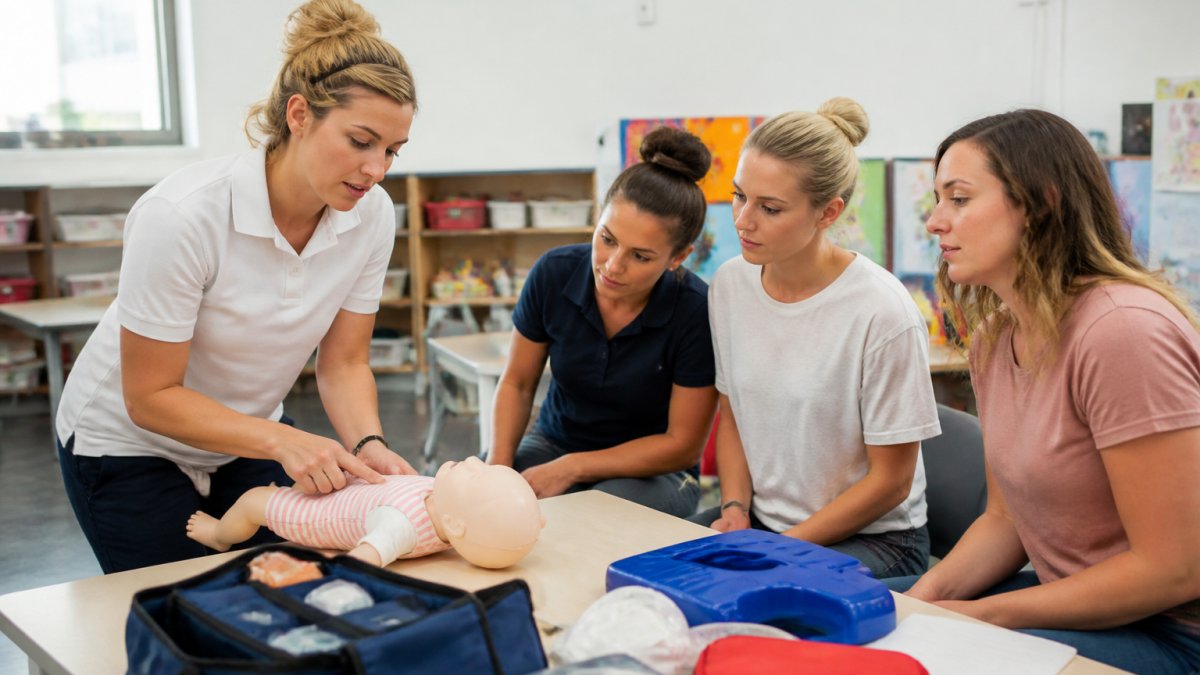
Ask about their trainer qualifications and experience with childcare settings. Experienced trainers understand the unique challenges of teaching in education and care environments. Confirm that the provider supplies all necessary equipment, training mannequins, first aid kits, AED units, so your centre doesn’t need to source anything.
Discuss timing and logistics. Mobile providers accommodate training during operating hours with rotating sessions or before/after operations.
Step 3: Confirm Your Training Dates and Location
Lock in specific dates and times. Confirm the training location, providers need a suitable space with tables, chairs, and room for movement. Clear clutter and ensure adequate lighting and ventilation.
Provide the trainer with special information about your staff or centre, mobility considerations, language barriers, or other needs. Confirm exact participant numbers so the trainer brings appropriate equipment.
Receive written confirmation including the trainer’s name, qualifications, arrival time, and expected duration.
Step 4: Prepare Your Centre for On-Site Training
Clear a suitable training space with furniture arranged so all participants can see and hear clearly. Remove hazards and ensure comfortable temperature and adequate lighting.
Brief your team about the training date, duration, and expectations. Encourage hands-on participation and engagement with practical scenarios.
Have staff rosters and emergency contact information available. Provide documentation about children with specific medical conditions, allergies, or special needs.
First Aid Certification Renewal for Childcare Staff
First aid certifications expire after three years. Schedule renewal training well before expiry. A mobile first aid course for childcare makes renewal straightforward, the trainer comes to your centre without requiring external venue bookings.
Renewal training covers CPR, choking response, wound management, and emergency protocols specific to children. Experienced staff often engage more deeply with scenario-based learning and complex situations encountered in their work.
Planning Your Renewal Cycle
Track expiry dates systematically in a spreadsheet. Set calendar reminders three months before expiry to book training in advance and prevent compliance gaps.
Consider staggering renewals across your team. If all certifications expire simultaneously, one large session is efficient. If spread across the year, book smaller sessions as each expiry approaches, reducing operational disruption.
Post-Training Implementation: Maintaining Skills and Equipment
First aid competency decays between training sessions. To sustain your team’s readiness, implement a post-training maintenance plan:
Monthly skill refreshers – Dedicate 15 minutes at team meetings to review key techniques using your mannequin or video demonstrations.
Quarterly scenario drills – Run mock emergency scenarios quarterly to build muscle memory and identify gaps in emergency procedures.
First aid kit audits – After training, audit first aid kits for expired items. Document and repeat every six months.
AED familiarisation – Ensure all staff know the AED location and have practised using it. Run monthly self-tests to confirm the device is operational.
Refresher Training vs. Full Renewal
ACECQA requires current HLTAID012 or equivalent qualification. A three-year renewal cycle is standard, though some centres conduct refresher training annually or every two years. Refresher sessions are typically 2-3 hours and focus on scenario-based practice.
If your centre experiences a critical incident or near-miss, schedule an unscheduled refresher session within weeks to reinforce learning and build team confidence.
Documenting Ongoing Competency
Keep records of monthly refreshers and quarterly drills. A simple log demonstrates to auditors that your centre actively maintains first aid competency between formal renewal cycles.
When you schedule a renewal course with a mobile provider, ask the trainer to observe one of your quarterly drills if possible. This gives the trainer insight into your team’s actual performance and allows them to tailor the renewal session to address specific gaps they observe.
Common Mistakes to Avoid When Arranging Mobile First Aid Training
Many centres book training reactively rather than proactively, waiting until certifications are about to expire. This creates unnecessary pressure and limits your choice of training dates.
Don’t assume all mobile trainers have equal experience with childcare settings. Verify that your chosen provider has substantial experience training educators in education and care environments.
Avoid scheduling training during peak operational times without planning coverage. If you’re taking multiple staff members out of direct care simultaneously, ensure adequate supervision remains for the children.
Don’t neglect to keep training records. Document who attended, when they completed training, and when their certification expires. These records are essential for regulatory compliance and demonstrate your centre’s commitment to child safety during audits.
Why Mobile Training Works Better for Childcare Centres
Mobile first aid training eliminates the logistical complexity of sending staff to external venues. Your team doesn’t travel, which saves time and reduces disruption to your centre’s operations.
Training in your own environment makes the learning more relevant.
Flexible scheduling is another advantage. Mobile providers can accommodate your centre’s specific needs, early morning before children arrive, during lunch breaks, or across multiple shorter sessions.
A mobile first aid course for childcare also builds team cohesion. Your entire staff learns together in a familiar setting, reinforcing your centre’s safety culture.
Scheduling a mobile first aid course for childcare requires planning, but the process is straightforward when you work with an experienced provider.
Frequently Asked Questions
What is HLTAID012 and why do childcare centres need it?
HLTAID012 Provide First Aid in an Education and Care Setting is the nationally recognised qualification required for childcare professionals in Australia. This unit covers practical first aid, CPR, and emergency response specific to child safety. Childcare centres must have staff trained in this unit to meet regulatory compliance and duty of care obligations. Mobile training delivers this qualification directly to your centre, making it easier to get your whole team certified without disrupting daily operations.
How often do childcare staff need to renew their first aid certification?
First aid certification renewal for childcare staff is typically required every three years to maintain compliance. However, CPR skills should be refreshed more frequently—many organisations recommend annual updates to keep staff confident and current with best practice. Mobile trainers can schedule renewal sessions at your centre on a convenient timeline, ensuring no staff member’s certification lapses.
Does a mobile first aid course meet ACECQA first aid requirements for childcare?
Yes, when delivered by an accredited RTO, mobile first aid training meets ACECQA first aid requirements for childcare. ACECQA (Australian Children’s Education and Care Quality Authority) requires childcare services to have educators trained in first aid and CPR. Mobile courses from qualified trainers satisfy these regulatory requirements without requiring staff to attend external training venues, allowing your centre to maintain continuity of care while ensuring compliance.
What’s the actual benefit of mobile first aid training versus sending staff to a training college?
Mobile first aid training eliminates scheduling conflicts, travel time, and the cost of replacing staff while they attend external courses. Your trainer brings all equipment and delivers practical, child-specific first aid scenarios directly at your centre. Staff remain on-site, reducing disruption to childcare operations. On-site training also allows the trainer to tailor content to your specific environment and child safety protocols, making the learning more relevant to your centre’s actual emergency response procedures.
Recent Comments