
Last Updated: October 28, 2026
Quick Summary
The best first aid pro alternatives for small businesses are mobile on-site providers that train your team at your premises, local community RTOs for budget single sites, or an in-house trainer for large stable workforces. Compare each option on accreditation, assessment rigour, delivery fit, records and renewal before you switch.
- Confirm the provider delivers through a registered training organisation and ask for the RTO ID.
- Hands-on CPR and bandaging practice should be assessed by a qualified assessor, not watched on video.
- Multiple sites or shift work favour a mobile provider because training comes to each location.
- Ask for a certificate register with expiry dates and confirm who notifies you when certificates lapse.
- Single site, tight budget: a local RTO with a group rate is workable with less coordination support.
Table of Contents
- Why Small Businesses Look Beyond First Aid Pro
- What Small Business First Aid Course Requirements Actually Apply
- Choosing a Workplace First Aid Provider: Five Checks That Matter
- On-Site First Aid Training for Businesses: What Delivery Looks Like
- Workplace First Aid Training Cost: What Drives the Quote
- Comparing First Aid Pro Alternatives Side by Side
- Which First Aid Pro Alternative Fits Your Business?
- Book Your On-Site Course and Get Your Team Certified
- Frequently Asked Questions
Why Small Businesses Look Beyond First Aid Pro
That is why operators may look at first aid pro alternatives for small businesses, and why the comparison below focuses on practical criteria for choosing a provider.
What Small Business First Aid Course Requirements Actually Apply
The first question to settle is what your workplace legally needs. Under the model work health and safety laws, employers must provide first aid facilities, equipment and trained personnel appropriate to the hazards of the workplace, and Safe Work Australia publishes the guidance that shapes those duties (EXTERNAL_LINK: Safe Work Australia’s first aid in the workplace guidance | safeworkaustralia.gov.au). The exact number of trained staff depends on your risk profile, shift patterns and distance from medical help.
First aid training is the structured instruction and assessment that gives a worker the practical skills to respond to injury or sudden illness until professional help arrives.
Matching Course Types to Your Risk Profile
A construction site and a suburban office do not need the same course mix:
Choosing a Workplace First Aid Provider: Five Checks That Matter
Picking a provider is a due diligence exercise, not a price hunt. Run these five checks before you book:
- Registration. Confirm the provider delivers through a registered training organisation and ask for the RTO ID. Ours is 91222, and you can verify any RTO on the national register maintained by ASQA (EXTERNAL_LINK: the national training register | training.gov.au).
- Trainer currency. Ask how trainers keep their own skills current and whether they hold assessing qualifications.
- Assessment rigour. Hands-on CPR and bandaging practice should be assessed, not watched on video.
- Delivery fit. Can they come to you, and can they handle multiple sites or split shifts?
- Records and reminders. Who tells you when certificates expire?
Verifying Accreditation and Workplace Recognition
A certificate is only useful if your regulator, insurer and clients recognise it. Ask the provider to show the unit codes on the statement of attainment, then check those codes against the national register yourself. If a course is non-accredited awareness training, that is fine for general knowledge, but it will not satisfy a workplace compliance obligation. Get the distinction in writing before you pay.
On-Site First Aid Training for Businesses: What Delivery Looks Like
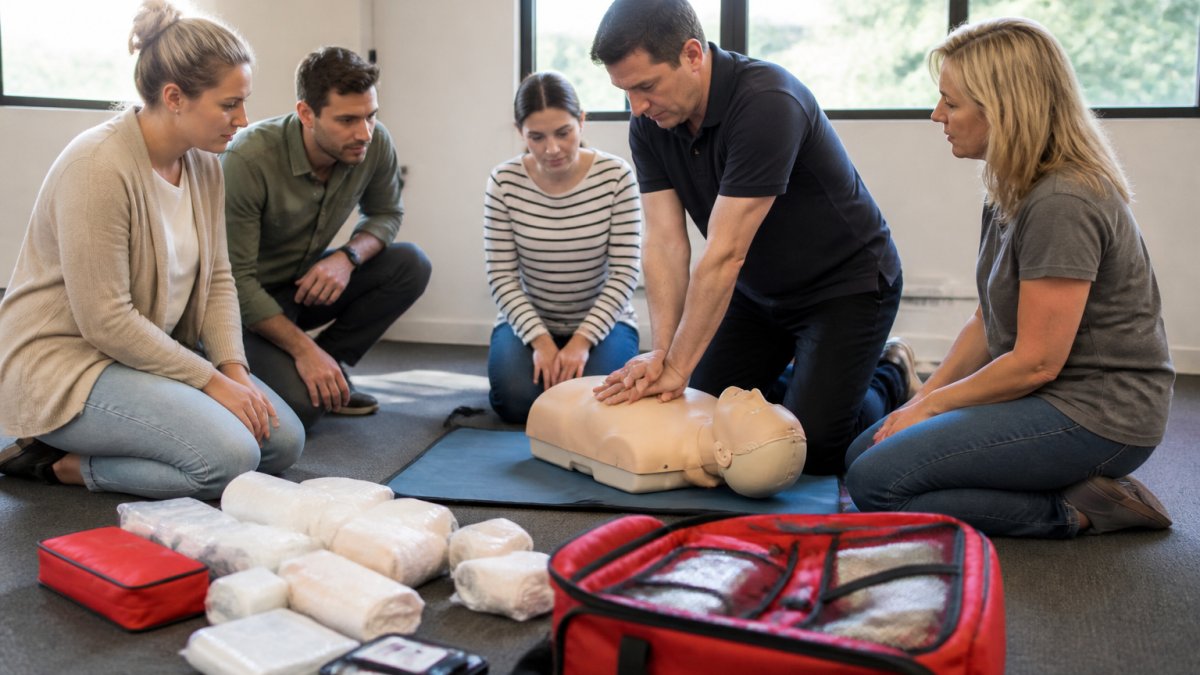
Provide First Aid Gold Coast delivers mobile first aid training at your location and provides the necessary training equipment.
Workplace First Aid Training Cost: What Drives the Quote
Workplace first aid training pricing depends on the provider and the details of the training required. Contact Provide First Aid Gold Coast for current pricing or a quote.
Comparing First Aid Pro Alternatives Side by Side
The table below compares provider models as a starting framework. Verify each provider against your own situation.
|
Option |
Delivery model |
Best for |
Multi-site coordination |
Renewal and records |
Main trade-off |
|---|---|---|---|---|---|
|
Mobile on-site provider (e.g. Provide First Aid Gold Coast) |
Trainer and equipment come to your premises |
Teams needing one coordinated session |
Can schedule separate sessions per site in the same window |
Certificate register with expiry dates on request |
Requires a suitable quiet space with floor room |
|
First Aid Pro |
Public courses at fixed venues on fixed dates |
Individuals booking ad hoc |
Limited, staff travel to a venue |
Individual certificates, you track expiry |
Staff travel and roster gaps |
|
Local community RTOs |
Mixed public and group courses |
Budget-conscious single sites |
Usually limited to one location |
Varies; ask what is provided |
Less coordination support |
|
In-house trainer |
Staff member certified to deliver |
Very large, stable workforces |
Good if you have trainers at each site |
You own the records entirely |
High setup and recertification cost |
The checks that separate providers
Before you accept any quote, run these checks against each option:
- Accreditation and unit codes. Confirm the provider delivers through a registered training organisation and ask for the RTO ID. Check the unit codes on the statement of attainment against the national register maintained by ASQA (EXTERNAL_LINK: the national training register | training.gov.au). A non-accredited awareness course will not satisfy a workplace compliance obligation.
- Assessment rigour. Hands-on CPR and bandaging practice should be assessed by a qualified assessor, not watched on video. Ask how assessment is conducted.
- Delivery fit for your roster. Can the provider train across split shifts, after hours, or multiple sites within the same window? If your team cannot all be off the floor at once, this is the deciding factor.
- Records and renewal administration. Ask for a certificate register with expiry dates, and confirm who notifies you when CPR or first aid certificates lapse. Manual chasing is where compliance quietly fails.
- Written quote against a consistent brief. Same course units, same staff numbers, same sites, same dates. Compare totals, not per-head prices.
Provide First Aid Gold Coast delivers mobile first aid training at your location, provides the necessary training equipment, and is a training partner of Healthcorp with RTO ID 91222.
Which First Aid Pro Alternative Fits Your Business?
Match the provider to your situation rather than the other way around.
- Single site, tight budget: a local RTO with a group rate is workable if you can live with less coordination support.
- Multiple sites or shift work: a mobile provider wins, because training comes to each location.
- High-risk trades: prioritise a provider that runs the electrical and low-voltage units alongside standard first aid.
- Childcare and community groups: confirm the childcare-specific modules and anaphylaxis units are included.
Book Your On-Site Course and Get Your Team Certified
Provide First Aid Gold Coast delivers mobile first aid and CPR training at your location, provides the necessary training equipment, and offers courses designed to be easy to understand. It is a training partner of Healthcorp with RTO ID 91222.
Call us to book your course.
Frequently Asked Questions
What are the alternatives to First Aid Pro for small businesses?
Provide First Aid Gold Coast delivers mobile first aid training at your location and provides the necessary training equipment. Contact the business for current pricing or a quote.
How do I choose a workplace first aid provider?
Provide First Aid Gold Coast delivers mobile first aid training at your location, provides the necessary training equipment, and is a training partner of Healthcorp with RTO ID 91222. Contact the business for current pricing or a quote.
What first aid training does a small business need?
Under the model WHS Regulations, a person conducting a business or undertaking must provide first aid equipment, facilities and trained staff, with the number of trained first aiders based on a risk assessment. Most small businesses settle on at least one staff member holding HLTAID011 Provide First Aid and HLTAID009 Provide CPR, refreshed annually for CPR and every three years for the full certificate. Higher-risk settings such as construction or electrical work may need additional units. Check your state or territory regulator’s first aid code of practice for the specific ratios that apply to you.
Can first aid training be tailored to a business or sporting group?
Provide First Aid Gold Coast delivers mobile first aid training at your location, provides the necessary training equipment, and offers courses designed to be easy to understand.
The challenge for most small businesses is not finding a first aid course, it is finding one that fits around rosters, multiple sites and a compliance record you can actually trust. Provide First Aid Gold Coast solves that with on-site delivery, all equipment provided, and trainers with extensive first aid and CPR experience. Get started with Provide First Aid Gold Coast and get your whole team certified without losing a day to travel.

Recent Comments